



Power of Play
2024-3-PL01-KA210-YOU-000286642
Erasmus+ KA210-YOU – Small-scale Partnerships in Youth
Main Results
23 youth workers and educators trained;
9 educational game prototypes created;
117 people involved in local testing in four countries;
4 final educational games developed;
104 participants reached through multiplier events;
average training evaluation: 5.74/6;
100% recommendation rate from training participants.
About the project
Power of Play was an Erasmus+ Small-scale Partnership created to strengthen the quality, innovation and inclusiveness of youth work through educational game design, gamification and non-formal education.
The project explored how games can become meaningful educational tools supporting reflection, cooperation, active citizenship, intercultural dialogue, inclusion, sustainability and soft skills development.
The project strengthened the competences of youth workers and educators in game-based learning and gamification. Participants improved their creativity, teamwork, communication, facilitation, intercultural cooperation and problem-solving skills.
Partner organisations gained new educational tools and strengthened their capacity to design, test, evaluate and disseminate innovative youth work methods. Local communities benefited from access to more engaging and participatory learning formats.

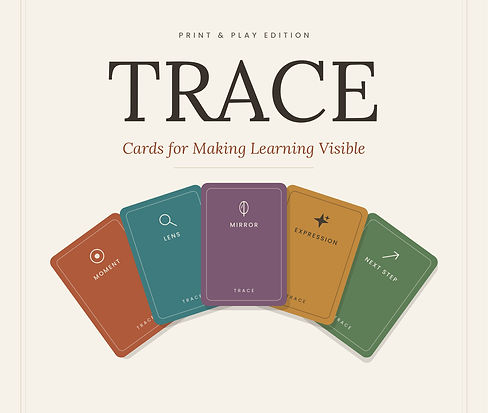
TRACE
Cards for Making Learning Visible
TRACE is a cooperative card-based reflection game. It helps learners move beyond general
comments such as “it was good” or “I learned teamwork” and describe a specific experience, the
meaning they made from it, the evidence of learning and a realistic next step.
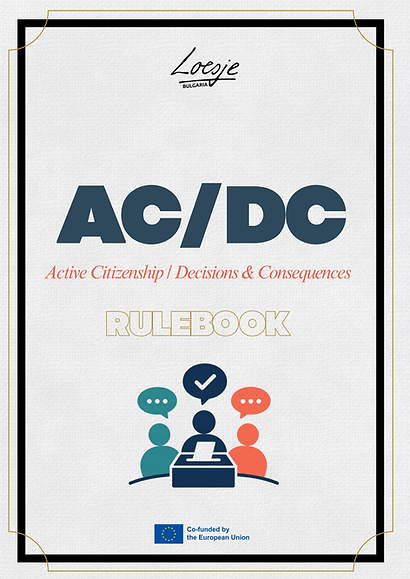
AC/DC
Citizenship/ Decisions & Consequences
You are the ministers of a coalition government. Together, you must run the country for four years. You will propose policies, negotiate, vote, manage public money and respond to crises. Every decision affects the country. Helping one sector may create problems in another. Spending now may reduce your options later.

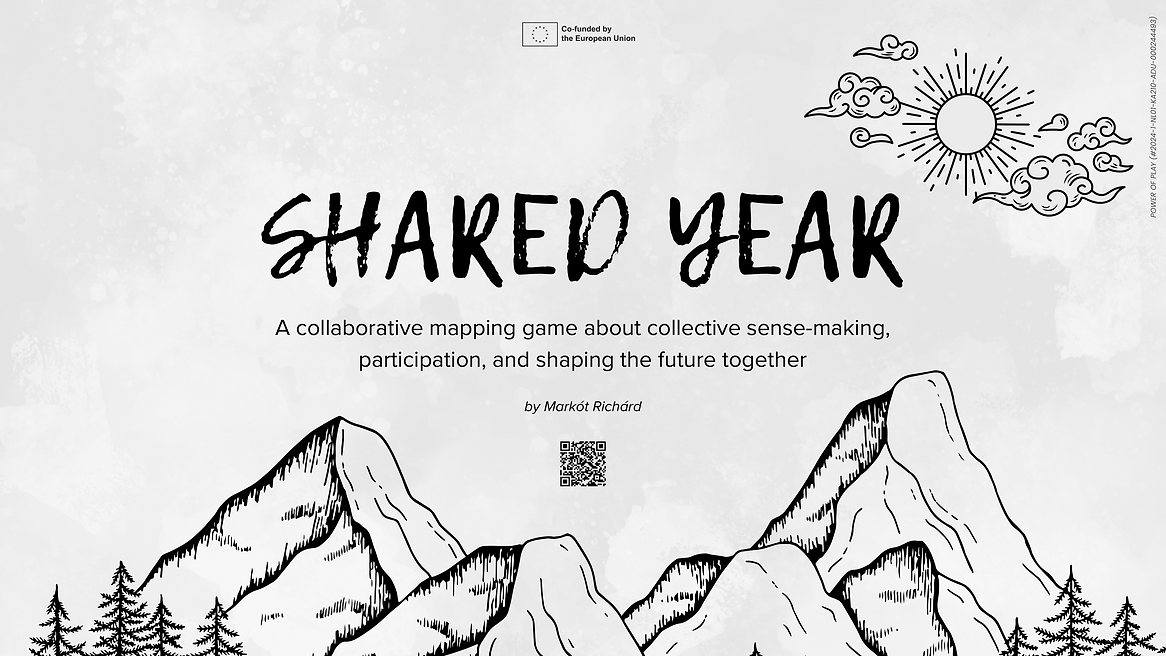
Shared Year
Shared Year is a collaborative map-drawing game about understanding a group and shaping its future together. During the game, players explore the current reality of their team, organisation, or community. Through structured turns they introduce observations, opportunities, tensions, and ideas. These contributions form a shared map that evolves during play. Players do not represent characters. Instead, they represent voices, perspectives, concerns, and ideas that exist within the community. Players help the group grow. Players challenge the group to see clearly. Both roles are necessary.
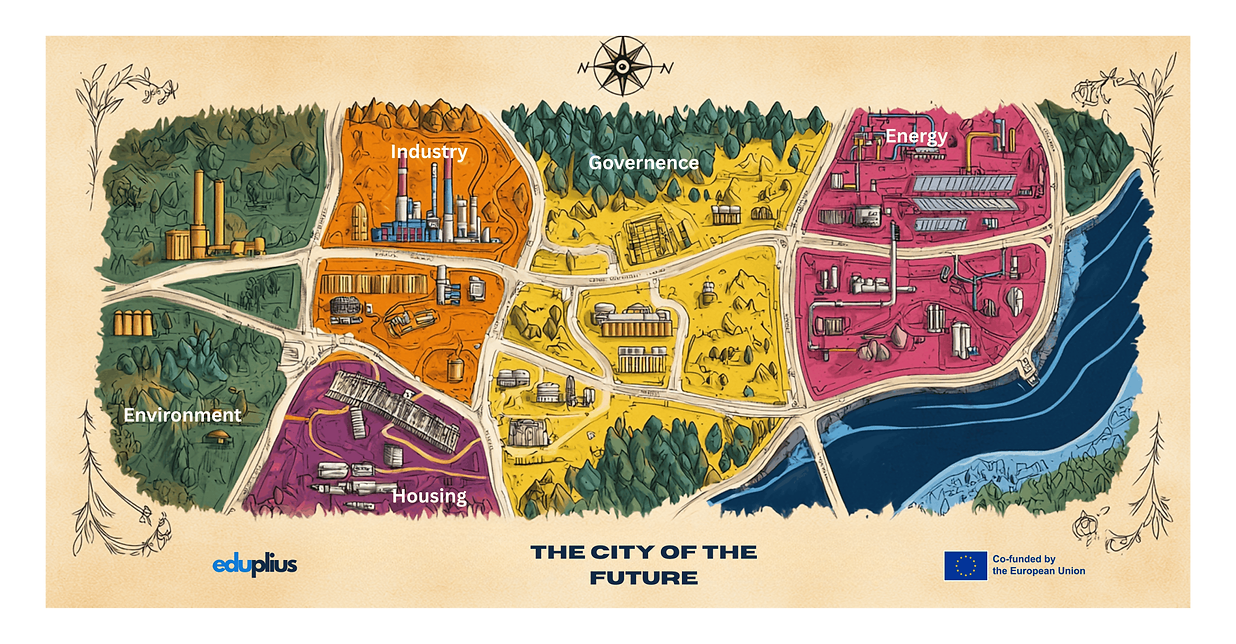
The City of the Future
Most games about cities are about winning: build the biggest, the richest, the most efficient. This one is not. „City of the Future“ asks a harder and more honest question — not “who builds the best city?” but “can we build a city that works for everyone, when each of us only controls one part of it?” That question is the whole game. Young people take charge of five parts of a growing city — its industry, its energy, its housing, its government, and its environment. Each team wants its own part to succeed. But they all share one map, one river, one sky, and one population. What one team builds lands on everyone else. And so, round by round, the players discover something that no lecture could teach them as well: their choices are connected.

Co-funded by the European Union. Views and opinions expressed are however those of the author(s) only and do not necessarily reflect those of the European Union or the Foundation for the Development of the Education System. Neither the European Union nor the granting authority can be held responsible for them.